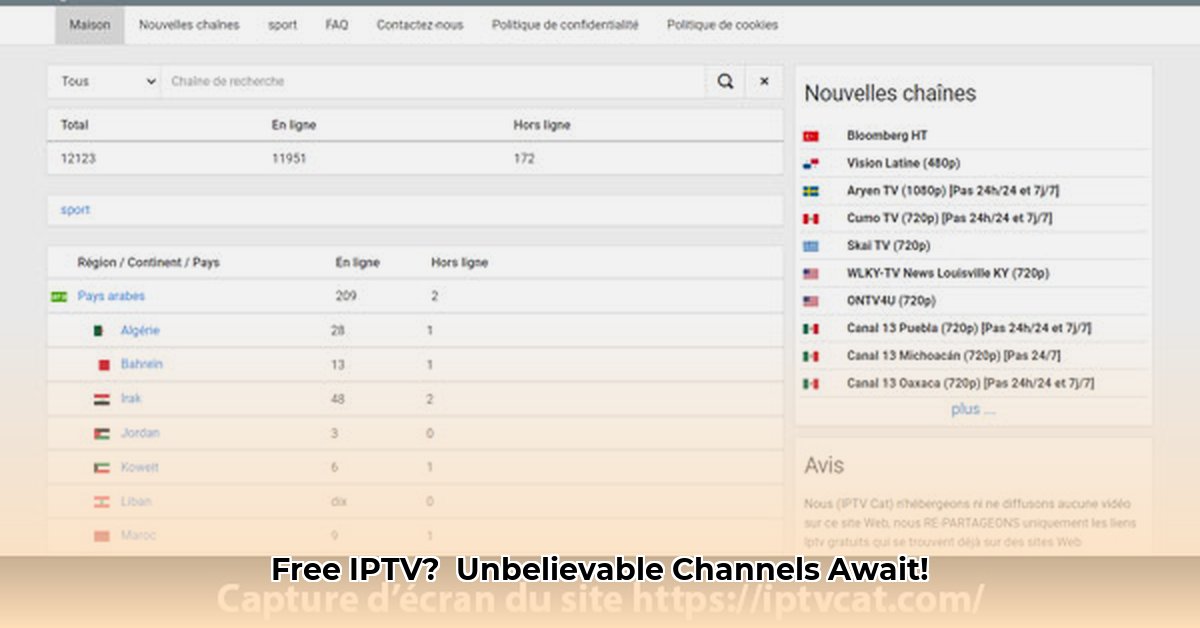
IPTVCat: A Deep Dive into Free IPTV Streaming in 2024
Considering free IPTV? IPTVCat is a popular choice, offering numerous channels via M3U playlists (files containing links to streaming content). However, is it the right choice for you? This review explores IPTVCat’s advantages, disadvantages, and the inherent risks of free IPTV services. We’ll also compare it to community-driven alternatives and offer actionable advice for safer streaming.
Is a vast library of channels a worthwhile trade-off for potential instability and legal concerns? This question lies at the heart of deciding whether IPTVCat or a similar service fits your needs.
Navigating the Wild West of Free IPTV
The free IPTV landscape is complex. Services like IPTVCat, alongside numerous community-run alternatives, offer free TV and movies. IPTVCat provides massive selection but often suffers from unreliability. Community projects usually offer a smaller, more curated selection, often with increased stability. This trade-off between breadth and reliability is crucial to consider.
The sheer quantity of channels available on IPTVCat is impressive, but how reliable is this massive selection? We’ll examine these important issues in this review.
IPTVCat: Weighing the Upsides and Downsides
Let's analyze IPTVCat's advantages and disadvantages objectively:
Pros:
- Extensive Channel Selection: IPTVCat offers a vast library of channels, attracting users seeking diverse programming.
- Generally Easy Setup: Configuring IPTVCat playlists on media players is typically straightforward.
Cons:
- Inconsistent Reliability: Many users report frequent buffering, freezing, and stream interruptions.
- Legal Uncertainties: Using IPTVCat involves considerable legal risk due to potential copyright infringement. Its lack of transparency regarding content sourcing exacerbates this risk.
- Opacity of Content Sources: IPTVCat's lack of information regarding its content sources makes risk assessment difficult.
Community-Driven Alternatives: A Different Approach
Community-driven IPTV projects often prioritize quality over quantity, focusing on mainstream, legally available channels. Unlike IPTVCat's extensive but potentially unreliable library, these projects offer fewer but more stable channels.
Are you willing to sacrifice a large number of options for improved reliability and reduced legal risk? The answer ultimately determines the best approach to your viewing habits.
Understanding the Risks Involved
Free IPTV operates in a legal gray area. Streaming copyrighted content without permission is illegal, and enforcement actions are increasing. While a Virtual Private Network (VPN) might mask your IP address increasing your online privacy, it does not protect you from legal consequences of copyright infringement. A VPN offers a degree of increased online privacy, but not legal immunity.
Making Smart Choices: Balancing Convenience and Caution
The long-term viability of free IPTV services like IPTVCat is questionable given legal challenges and increased scrutiny. Considering legitimate streaming services, even if they require subscription fees, offers a far more stable and legally secure experience. This approach removes legal risks entirely, eliminating the stressful uncertainty associated with free IPTV.
Tips for Safer Streaming
- Diversify Sources: Don't rely solely on one service. Multiple sources reduce the impact of service outages.
- Use a VPN (with awareness of its limitations): A VPN offers increased privacy but provides no legal protection against copyright infringement.
- Stay Informed: Keep updated on IPTV regulations and copyright laws to proactively manage your risk.
- Respect Copyright Laws: Unauthorized access to copyrighted content is illegal and carries serious penalties.
How to Legally Minimize Risks Using Free IPTV Services
Free IPTV services' appeal rests on their extensive content libraries, but the legal risks are substantial. Minimizing risk requires caution and thorough due diligence.
Understanding the Risks: The Legal Landscape
Free IPTV services often operate illegally, bypassing licensing agreements. This exposes both providers and users to legal repercussions. Copyright infringement carries severe penalties.
The sheer volume of this infringement magnifies the legal stakes. While downloading a single pirated movie is a crime, free IPTV services stream countless copyrighted works without permission, significantly impacting creative industries.
Mitigating Risks: A Practical Approach
Minimizing risk involves these key steps:
- Verify Provider Legitimacy: Thoroughly research any provider before use, checking reviews and transparency levels. Be wary of services that seem too good to be true. These often mask considerable legal risks.
- Scrutinize Terms of Service: Carefully review terms and conditions, specifically clauses concerning copyright and liability. Lack of transparency suggests potential legal issues.
- Understand Your Local Laws: Copyright laws vary significantly between countries. Familiarize yourself with your region's regulations.
- Prioritize Paid Alternatives: Paid, licensed IPTV services eliminate legal risk, although at a cost. This allows you to legally support content creators.
- Report Illegal Activities: Report services involved in clear copyright infringement to the appropriate authorities. Your cooperation helps combat illegal streaming.
The Illusion of "Free": Navigating Legal Complexities
Many free IPTV apps exploit loopholes, but these are often not legally sound. The complexities often obscure the underlying legal liabilities, exposing users to potential risks.
Key Takeaways: A Balanced Perspective
- Free IPTV services commonly operate illegally.
- Thorough research is paramount. Verify providers and their practices carefully.
- Read the terms of service. Opaque practices are warnings.
- Understand your jurisdiction's laws for copyright.
- Legal, licensed alternatives offer peace of mind though they have a cost.
- Report illegal activity to protect content creators.
This review aims to equip you with the necessary information to make an informed decision regarding the use of free IPTV services. While the appeal of free content is strong, understanding the associated risks is crucial for responsible consumption.